
The best-supported estimate for Yanis Varoufakis's net worth sits somewhere in the range of $3 million to $8 million USD, though no single audited figure exists in the public domain. That range is built from documented income streams, Greek parliamentary financial disclosures, and reported fees rather than from a personal balance sheet anyone has actually seen. If you want to understand where that number comes from and how much weight to put on it, read on.
Yanis Varoufakis Net Worth: Verified vs Estimated Figures

Dimitri Papadopoulos
14 Apr 2026
Who Varoufakis is and why the numbers are slippery
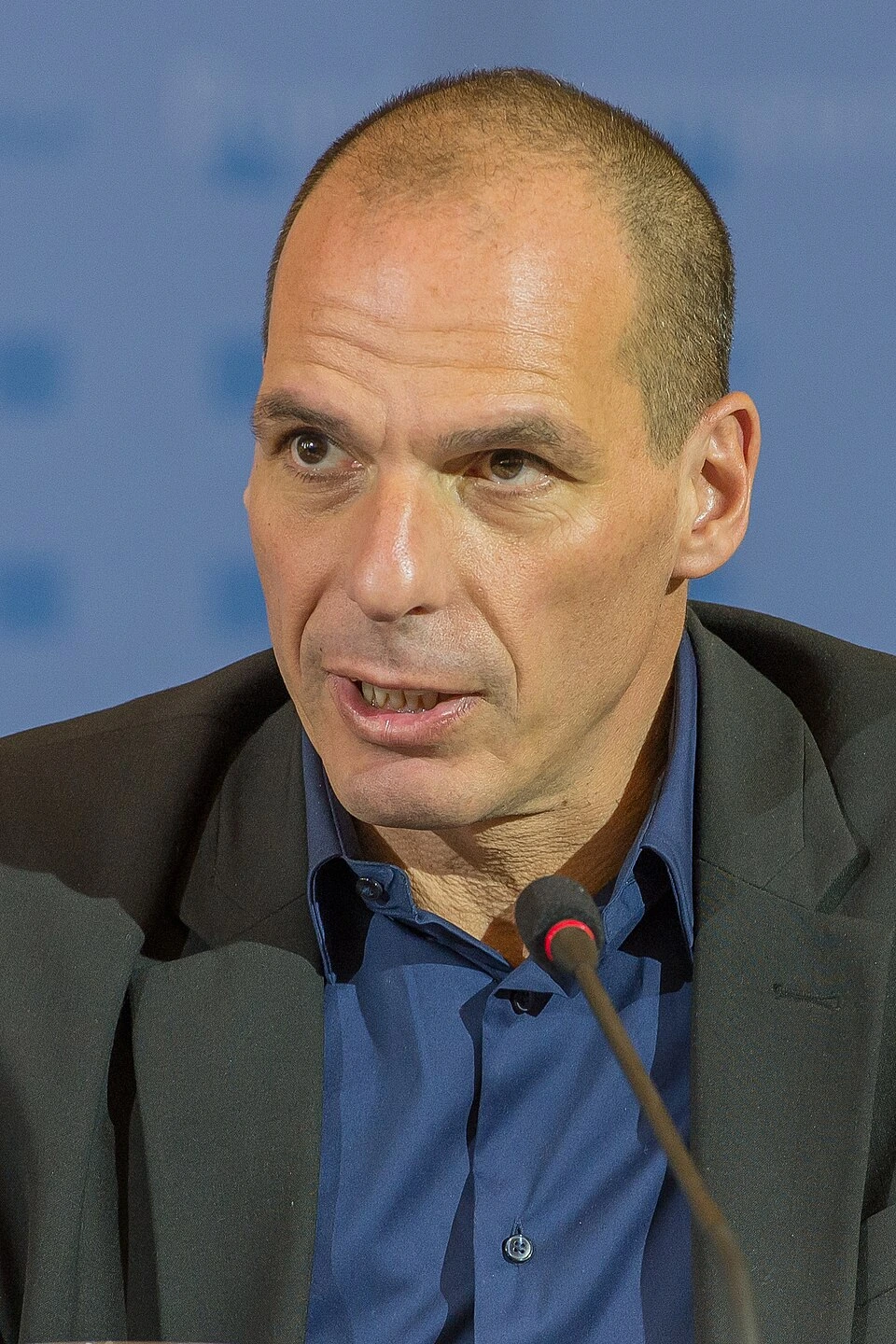
Yanis Varoufakis is a Greek-Australian economist who became one of the most recognisable faces of the European debt crisis. He served as Greece's Minister of Finance from 27 January 2015 until his resignation in July 2015, a short but globally watched tenure during the peak of Greece's bailout negotiations with the Troika. Before and after that role, he held a professorship of Economic Theory at the University of Athens (from September 2006 onward, per his official CV), co-founded the Democracy in Europe Movement 2025 (DiEM25) in 2016, and built a parallel career as a public intellectual through books, media, and speaking engagements. He has since also been involved in Greek electoral politics through the MeRA25 party.
The reason net-worth estimates for him vary so wildly is that his income comes from several very different channels, none of which are fully public. Academic salaries in Greece are modest by international standards. His political salary as a minister was capped under Greek public-sector pay rules. But his speaking fees and media compensation are another matter entirely, and those figures are only known when he or a news outlet discloses them.
That mixture of a modest official salary floor and a potentially large informal income ceiling makes any single number unreliable. For comparison, you can see similar valuation challenges for other prominent Greek political figures: Alexis Tsipras's net worth faces the same problem of mixing public-sector pay with post-politics earnings.
What a net-worth number actually includes

When any credible outlet calculates net worth, they are trying to arrive at total assets minus total liabilities. For someone like Varoufakis, the asset side would include cash and bank deposits, any real estate he owns, investment portfolios, the value of intellectual property like book royalties, and any business interests. The liability side would cover mortgages, loans, and any other debts. What gets reported in Greek parliamentary disclosures is a partial version of this: declared bank balances, property holdings, and income sources for the relevant year.
A concrete example: news reporting on Varoufakis's Greek financial declarations mentions declared euro amounts in bank accounts in Switzerland and Greece (as of 2022 filings) and also references a yacht that was reportedly stolen in 2021. These are actual declared assets. But declared assets in Greek political filings are often incomplete, cover only certain categories, and can be filed as 'no change' from prior years without itemisation. So the official filings give you a floor, not a ceiling.
His main documented income streams
Academic salary

Varoufakis held his University of Athens professorship from September 2006. Greek public university professor salaries are regulated and relatively low by Western European standards, typically ranging from roughly €2,000 to €3,500 per month gross depending on rank and years of service, and have been subject to austerity-era cuts. This stream is consistent but not large.
Political income
As Minister of Finance and later as an elected MP under Syriza and MeRA25, Varoufakis received government compensation under Greek public pay scales. Ministerial and MP salaries in Greece are publicly regulated and subject to the same austerity caps applied across the public sector since 2010. His ministerial tenure in 2015 was just six months, so total political income from that period alone is modest.
Books, royalties, and media

Varoufakis has published multiple books with major international publishers, including 'Adults in the Room' (2017), 'Talking to My Daughter About the Economy' (2017), and 'Another Now' (2020), among others. International advances and royalties from this catalogue, particularly from English-language editions sold globally, can be meaningful. He has also been a frequent guest on major television and radio programmes internationally. Politico reported that he disclosed being paid more than €1,000 per minute for a television interview in Italy, which suggests his media appearance fees are substantial even if irregular.
Speaking fees
This is arguably the largest undocumented income stream. ProtoThema English reported that Varoufakis charges €60,000 for corporate speaking events. A separate report attributed a fee of $60,000 plus all expenses to a booking arranged through the London Speaker Bureau. If he does even a handful of these per year, the annual income from this channel alone would significantly exceed his academic or political salary. This is the income stream that most dramatically affects net-worth estimates upward, and it is also the least verifiable in terms of frequency.
Where the reported estimates come from and why they conflict
If you search for 'Yanis Varoufakis net worth,' you will find figures ranging from around $3 million to over $7 million depending on the site. The variation is almost entirely explained by methodology, not by access to better data. Sites like PeopleAI publish a yearly net-worth series (showing figures like $7.32 million for 2026 down to $4.39 million for 2022) but explicitly state that their calculations are based on 'social factors' including Google and Wikipedia signals rather than financial filings. That is not a net-worth calculation, it is a social influence score dressed up as a financial figure.
A second pitfall is identity confusion. When searching for Varoufakis on some net-worth aggregator sites, you can accidentally land on pages about a completely different person. For instance, CelebrityNetWorth has a 'Yanni' page that refers to a Greek pianist of that name, not Yanis Varoufakis. If someone pulls that figure and attributes it to Varoufakis, the error compounds quickly across republished content.
More credible estimates work from the bottom up: anchoring on his known academic salary range, adding documented political compensation, estimating book advances and royalty streams, and then applying a reasonable assumption about speaking-fee frequency. That bottom-up approach produces a range rather than a single number, which is more honest. For context on how similar estimates are built for other Greek public figures, the methodology used to assess Varoufakis's net worth in dedicated financial profiles follows this same general logic.
How to verify a net-worth claim yourself

If you see a specific number cited somewhere, here is how to pressure-test it before repeating it.
- Check the methodology first: does the site say how it calculated the figure? If it mentions social influence signals, Wikipedia traffic, or similar proxies, treat the number as a rough popularity index, not a financial estimate.
- Look at the time period: net worth figures shift with career events. A figure from 2018 is not the same as one from 2025. Check whether the source specifies a reference year.
- Check whether it is salary vs assets: some sites conflate annual income with net worth. They are completely different things. If someone earns €200,000 a year and the site says 'net worth: €200,000,' that is almost certainly an error or a conflation.
- Verify currency and conversion: many sites publish in USD but the underlying data may be in euros. A figure pulled from a Greek filing in euros will look different after conversion depending on the exchange rate used.
- Go to the official Greek parliamentary disclosures: Vouliwatch digitises and publishes Greek MPs' financial interest statements based on filings submitted to the parliamentary committee under Greek law. Their public API and documentation give you access to declared assets and income for specific years. This is far more reliable than any third-party net-worth calculator for the declared portion of his wealth.
- Cross-reference with Vouliwatch's transparency campaign: the organisation has pushed for more complete declarations, which means even the official filings have gaps. If a year's filing shows 'no change,' it does not necessarily mean nothing changed.
The same verification steps apply when researching any Greek public figure. Comparing notes on figures like Tsipras's net worth shows that the same structural gaps in Greek political disclosure affect almost everyone in that tier of public life.
The most honest net-worth range available right now
Given everything that is publicly documented, a well-supported range for Varoufakis's net worth as of April 2026 is approximately $3 million to $8 million USD. Here is how that range is constructed:
| Income/Asset Source | Estimated Contribution | Confidence Level |
|---|---|---|
| Academic salary (University of Athens, 2006 to present) | Low base; roughly €2,000–3,500/month gross over ~18 years | High (regulated public scale) |
| Political income (minister 2015, MP periods) | Moderate; regulated Greek public pay for defined terms | High (publicly regulated) |
| Book advances and royalties (multiple international titles) | Potentially significant; €100,000–500,000+ cumulative | Medium (not publicly itemised) |
| Media appearance fees (e.g., €1,000+/min TV interview) | Variable; meaningful per event but frequency unknown | Medium (self-disclosed examples only) |
| Corporate speaking fees (€60,000 per event reported) | High per event; annual total unknown | Low-medium (self-reported, frequency unclear) |
| Declared bank deposits (Swiss and Greek accounts, 2022) | Partially disclosed in Greek parliamentary filings | Medium (declared floor, not full picture) |
| Other assets (e.g., previously owned yacht, property) | Unknown current value; yacht reportedly stolen 2021 | Low (limited disclosure) |
The lower bound of $3 million reflects what can be loosely inferred from cumulative academic and political earnings plus modest book and media income over roughly two decades. The upper bound of $8 million reflects scenarios where speaking fees are regular and book royalties from global sales are substantial. The real number could sit anywhere in that range, and there is genuine uncertainty at both ends. Treat any single figure you see without a sourced methodology with scepticism.
What to watch for updates
Net worth is not static, and for someone as active as Varoufakis, several events could shift the picture meaningfully. Here is what to monitor:
- Annual Greek parliamentary financial interest statement filings: these are submitted each year and processed by Vouliwatch. A new filing year with detailed asset disclosures would update the declared-asset floor immediately.
- New book contracts or major publishing deals: a high-profile memoir or economics book with a major advance (which can run into six figures for someone of his international profile) would shift the picture upward.
- Major speaking engagements or media deals: a documentary deal, a Netflix-style commission, or a significant institutional role (such as a university chair with a large salary) would be worth tracking.
- Political career developments: if Varoufakis returns to elected office or accepts a public-sector role, his compensation becomes subject to Greek disclosure rules again, which adds a new verifiable data point.
- Any publicly reported legal or financial events: asset disputes, inheritance events, or major property transactions sometimes surface in Greek court records or notarial registries and can be cross-checked.
The best sources to check regularly are Vouliwatch for Greek parliamentary disclosures, his own official site and social media for career announcements, and credible financial journalism outlets that cover Greek politics. Vouliwatch’s English About page explains what the project is and what it covers. Avoid relying on sites that recycle estimates without citing a methodology.
If you are researching this in the context of Greek public figures more broadly, it is worth noting that wealth estimates for public intellectuals who straddle politics and media are always harder to pin down than those for, say, shipping magnates with audited company filings. For a different kind of Greek public profile with its own valuation challenges, the research approach used to estimate Alexis Georgoulis's net worth illustrates how entertainment and politics can mix in ways that complicate straightforward financial profiling.
The bottom line: Varoufakis is not wealthy by oligarch standards, but he is comfortably above what his academic or political salary alone would suggest, primarily because of the speaking and media income that comes with being one of the most globally recognisable Greek economists of the past decade. Tagesspiegel reports that Yanis Varoufakis was paid over €1,000 per minute for a televised interview. Use the $3 million to $8 million range as a working estimate, anchor it to his declared assets when those filings are available, and update it as new career events occur.
FAQ
Why do net worth sites disagree so much, even when they cite the same person?
“Net worth” estimates typically assume assets minus liabilities, but personal taxes, retirement contributions, and currency conversion effects can shift the effective take-home picture. If you want a more realistic view, ask whether the estimate treats his income before or after Greek and international taxes, and whether it accounts for debt-like obligations (loans, margin, or mortgages) that may not be publicly itemized.
Can Greek parliamentary disclosures be used as the “real” net worth?
Yes. A common mistake is mixing up declared account balances or property listings from Greek filings with total worldwide assets. Greek disclosures can show some categories (for example, bank balances and property) while leaving out other asset types (investments, businesses, or detailed ownership structure). Treat filings as a floor, not a complete balance sheet.
How should I compare a net worth figure from different years (for example, 2022 vs 2026)?
Track time windows. Many sources update a figure by year, but an “as of 2026” number might be extrapolated from older disclosures plus assumptions about speaking and royalties. When comparing figures, check whether the underlying calculation year matches the disclosure year, otherwise you are comparing non-identical baselines.
How can I tell if reported speaking fees actually change net worth estimates significantly?
Check whether the cited “speaking fee” refers to a flat rate or includes travel, lodging, and security, and whether it covers one appearance or a full speaking tour. A single headline price (like “€60,000”) can overstate or understate annual income depending on how many events occurred and whether expenses were billed separately.
What methodology signals should I look for before trusting any Yanis Varoufakis net worth number?
Look for methodology transparency: do they reference disclosed bank balances and property holdings, then build upward with income assumptions, or do they generate a number from social signals. If there is no clear chain from filings to assumptions, the figure should be treated as a guess rather than a calculation.
How do I avoid identity confusion when searching for Yanis Varoufakis net worth?
If you see an estimate bundled with a celebrity or similarly named page, confirm the identifier details (middle name, nationality, profession) before trusting the amount. Identity confusion is especially common for “Yanni” style pages, and the wrong identity can propagate through reposts and scraped “net worth” databases.
What real-world updates would most likely move the $3 million to $8 million range?
Watch for events that create one-time or contract-based income, such as major book releases with larger advances, high-profile television appearances, or a new speaking-agent arrangement. Also watch for changes in disclosed assets in Vouliwatch-style summaries, because a new property listing or bank balance jump can narrow the uncertainty range.
Does currency conversion (EUR to USD) meaningfully affect Yanis Varoufakis net worth estimates?
Yes. Net worth is often quoted in USD, but the underlying declared assets can be in euros (and potentially other currencies). Exchange-rate movements, plus inflation and cost-of-living shifts, can change the USD value even if holdings stay stable, so compare estimates using the same base currency where possible.
What’s a better way to estimate income frequency than assuming a constant annual speaking income?
For an active public figure, estimates based on “typical annual earnings” can undercount spikes and overcount quiet periods. A practical approach is to bracket income by looking at how many documented interviews or speaking events occurred in a given year, then stress-test the estimate using low, medium, and high frequency scenarios.