
The short answer: there is no publicly verified net worth figure for Giorgios Bakatsias as of April 2026. What does exist is a solid trail of public business records, real estate transactions, and media coverage that lets you build a credible range estimate. That range, based on everything available today, sits somewhere between $10 million and $40 million, with low-to-moderate confidence. Here is how that number is built, what drives it, and how you can check whether it needs updating.
Giorgios Bakatsias Net Worth 2026 Estimate Range and Method

Dimitri Papadopoulos
17 Apr 2026
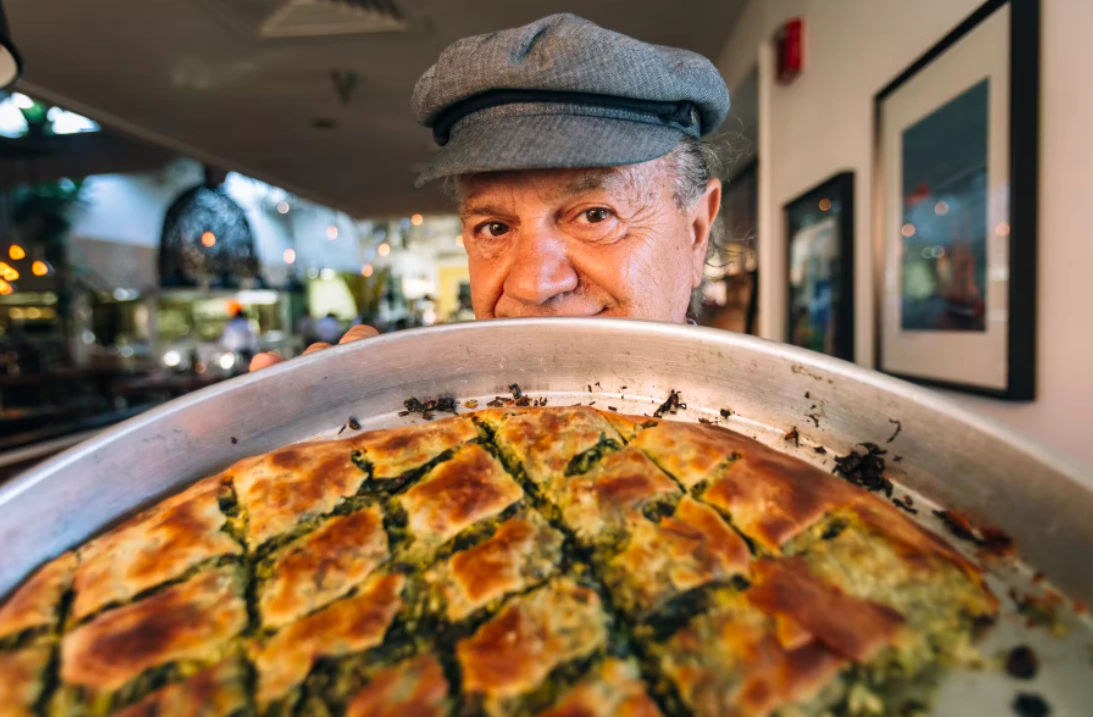
Who exactly is Giorgios Bakatsias?

Before getting into numbers, it is worth pinning down the person. Web searches for "Giorgios Bakatsias" return results that occasionally blur into other people with similar surnames. The Giorgios Bakatsias covered here is the Greek-born restaurateur based in North Carolina, identified in public records as "Giorgios Nikolaos Bakatsias" on North Carolina ABC Commission permit filings. He is the Founder and Owner of the Giorgios Lifestyle and Hospitality Group, and his flagship restaurant is Parizade in Durham. He is not affiliated with any shipping, media, or political operation, which separates him from other Greek public figures sometimes researched on this site.
His group should not be confused with unrelated "Bakatsias" entries that appear in searches. The identity anchor here is the NC ABCC permit record listing him as manager and officer for Giorgios Epicurean Market, the BBB profile for Bin 54 LLC naming him as Member Manager, and the Giorgios Hospitality Group's own corporate pages confirming his founder/owner role.
What "net worth" actually means here
Net worth is assets minus liabilities. For a private business owner like Bakatsias, that means the estimated value of everything he owns (restaurant real estate, business equity, personal property, investments) minus what he owes (business debt, mortgages, any outstanding liabilities). It is not revenue, not profit, and not the combined turnover of his restaurants. A restaurant group doing $20 million a year in revenue might be worth $5 million or $50 million depending on margins, debt load, and how the market values the business. That gap is exactly why you will always see a range, not a single clean number, for someone like this.
For context, even rigorous outlets like Forbes use range-based methodology with cutoff dates and explicit confidence caveats when estimating the wealth of private individuals. The same principle applies here. The estimate below is a snapshot based on data available as of April 17, 2026, and should be treated accordingly.
The estimate: $10M to $40M as of April 2026

Confidence level: Low to moderate. Last updated: April 17, 2026.
That range is wide, and that width is honest. The lower bound ($10M) reflects a conservative view of a private mid-market restaurant group with significant operational costs, staff, leases, and debt typical of the hospitality industry. The upper bound ($40M) accounts for the possibility that he owns real estate outright, that his business equity is valued favorably given decades of brand equity and a 21-location footprint, and that personal assets not visible in public filings push the total higher. No verified balance sheet exists. This is an informed estimate built from the signals below.
How he built his wealth: career and income sources
Bakatsias is a native of Greece who relocated to North Carolina and has been building his hospitality empire for more than 40 years. A 2007 Duke Today article described him as the creative force behind more than 25 restaurants, food venues, and gourmet markets at that time. Indy Week notes that Giorgios Bakatsias is behind Parizade/Vin Rouge/Bin 54 and describes his role in opening Rosewater Kitchen & Bar A 2007 Duke Today article described him as the creative force behind more than 25 restaurants, food venues, and gourmet markets at that time.. By January 2026, an Axios Raleigh report confirmed the group had grown to 21 active restaurants stretching from Chapel Hill to Wilmington, with a new concept, Géos Tavern & Oyster Bar, in the pipeline for Chapel Hill.
His income sources are almost entirely tied to his hospitality group. These include operating profits from restaurants and bars (Parizade, Verde, George's Garage, Vin Rouge, Spice Street, Bin Fifty-Four, Rosewater Kitchen & Bar, and others), revenue from gourmet market operations, management fees from any third-party venues he operates (such as his Nasher Museum cafe contract reported by Duke), and any rental income from properties owned by the group. As of early 2026, the NCRLA Restaurant Activity Report also listed him as Founder/Owner for Fortuna Cucina Italiana, a planned new concept, confirming active expansion continues to drive future income.
Assets and holdings that shape the estimate
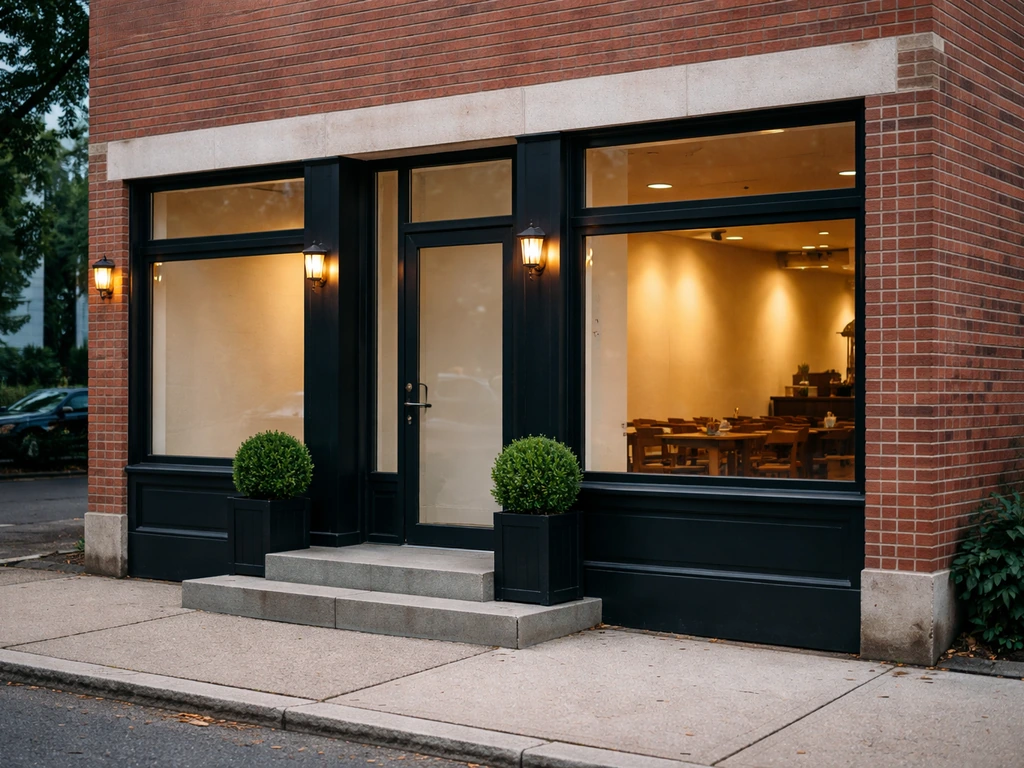
The most concrete public data point on his asset base is a March 2023 real estate transaction: Giorgios Hospitality Group acquired a building at 1981 Eastwood Road in Wilmington for $3.6 million, earmarked for a new steakhouse concept. That single transaction is useful because it confirms the group makes significant capital commitments to owned real estate, not just leased space. It also anchors the minimum asset floor: if one building acquisition is $3.6 million, a portfolio of multiple properties across Durham, Raleigh, Chapel Hill, and Wilmington adds up quickly.
Beyond real estate, the main asset is business equity. A restaurant group with 21 locations and a 40-year track record carries meaningful brand value, established supplier relationships, and multi-location infrastructure that a buyer would pay a premium for. In the restaurant industry, acquisition multiples for stable, multi-unit operators typically range from 3x to 6x EBITDA. Without public financials, EBITDA is unknowable, but a 21-location group with flagship properties in major North Carolina markets would conservatively generate several million dollars in annual operating profit if margins are healthy. Even at the low end of that multiple, business equity alone likely accounts for the bulk of the estimated range.
No publicly indexed litigation, asset-freeze orders, or major liability events tied to Bakatsias were found in the research for this article, though the absence of such records does not rule out private obligations.
How this estimate was built: the methodology
The estimation process combines four categories of public signals:
- Public business records: NC ABCC permit filings, BBB officer listings, and corporate registrations confirm entity ownership and management roles. These do not show financials but establish which businesses are tied to the individual.
- Real estate transactions: The $3.6 million Wilmington property purchase (March 2023) is the only confirmed, dollar-denominated asset transaction found in public records. It sets a minimum floor for property holdings.
- Media reporting: Axios Raleigh, FSR Magazine, Duke Today, and Good Life Wilmington provide a timeline of openings, expansions, and scale that allows a rough proxy for business size and trajectory.
- Industry benchmarks: Standard restaurant industry valuation multiples and typical operator margins are applied to infer a plausible range for business equity, with conservative assumptions given the private nature of the company.
What cannot be verified without private documents: personal savings and investments, total debt load on properties and operations, exact profit margins, any passive income from external investments, and whether assets are held personally or through corporate structures that separate them from his personal net worth. These unknowns are the primary reason the range is wide.
How Bakatsias compares to similar Greek figures
Bakatsias occupies a distinct tier among Greeks who have built wealth in the United States through brand-driven entrepreneurship rather than shipping or finance. He is best compared to others who built hospitality or consumer brands from scratch over decades. For instance, Giorgos Tsetis represents the model of a Greek entrepreneur who built wealth through a focused consumer product rather than a multi-location service business, while the hospitality-scale comparison points more toward regional restaurant group owners operating across multiple markets. Within the Greek diaspora specifically, Giorgos Mazonakis illustrates how creative professionals accumulate wealth differently from operators, with income tied to rights and performance rather than real estate and business equity.
For a broader sense of where Bakatsias sits in the wealth landscape of notable Greeks, it helps to understand that the upper tier of Greek-American wealth is dominated by figures in shipping and finance. Someone like Giorgio Tsoukalos shows how media and entertainment create entirely different wealth profiles even for Greek figures with comparable name recognition. Bakatsias is solidly in the entrepreneurial operator category: real assets, real operations, and wealth that is largely illiquid and tied to the success of his business.
Among Greeks whose wealth is more community-facing and civic in character, Ike Grigoropoulos provides another reference point for how public visibility and institutional involvement intersect with private wealth estimation in the Greek diaspora context.
| Profile | Primary Wealth Source | Estimated Range | Confidence |
|---|---|---|---|
| Giorgios Bakatsias | Multi-location restaurant group, real estate | $10M – $40M | Low-Moderate |
| Comparable: Regional multi-unit restaurant operator (US) | Restaurant equity, property | $5M – $50M | Low-Moderate |
| Comparable: Greek-American entrepreneur (consumer brand) | Brand equity, IP | $5M – $100M+ | Low |
What to check next and how to stay current
If you want to validate or update this estimate, here are the most useful sources to monitor and what to look for in each one:
- NC ABCC permit database: Check for new permit applications or ownership/manager changes under Bakatsias, Giorgios Nikolaos. New permits signal new locations and capital deployment; removed permits can signal closures or sales.
- North Carolina Secretary of State business search: Search for LLC registrations tied to Bakatsias or Giorgios Hospitality Group. New entities signal expansion; dissolved entities can indicate contraction or restructuring.
- County property records (Durham, New Hanover, Wake, Orange counties): Search for real estate transfers tied to his name or known entity names. Each transaction gives a dollar-denominated data point for the asset base.
- NCRLA Restaurant Activity Report: The February 2026 edition already flagged Fortuna Cucina Italiana. Future editions may list additional pipeline concepts, giving early signals of capital commitment.
- Local business media (Axios Raleigh, Triangle Business Journal, Good Life Wilmington): These outlets consistently cover his openings and expansions. Each story contains operational details that refine scale assumptions.
- Greek asset disclosure registers (πόθεν έσχες): Applicable only to Greek public officials; Bakatsias holds no known Greek public role, so this is not a current source, but worth checking if his civic involvement in Greece changes.
The single biggest update trigger to watch for is a sale or partial sale of the Giorgios Hospitality Group or any of its major properties. A transaction like that would surface in county deed records and likely in local business media, and it would be the clearest signal that a net worth revision is warranted. Short of that, each new property acquisition or restaurant opening moves the estimate modestly upward, while closures or reported financial difficulties would push it down.
The bottom line: Giorgios Bakatsias has built a genuine, multi-decade hospitality business with verifiable real estate assets and a 21-location footprint as of early 2026. The public record supports a credible estimate in the $10M to $40M range, but the honest answer is that the true figure could sit anywhere in that band depending on private debt and business performance data that simply is not publicly available. That is not a failure of research; it is the reality of estimating wealth for private business owners who have no obligation to disclose their finances.
FAQ
What event would most likely push the “giorgios bakatsias net worth” estimate up or down?
If a new county deed shows a property transfer involving Giorgios Hospitality Group, treat it as the highest-impact net worth signal. Ask whether it is an outright purchase, a refinancing, or a sale, because refinancing may change available cash flow without materially changing asset value.
Why can’t I just estimate net worth from restaurant revenue or the 21-location count?
Do not use revenue or number of locations alone to infer net worth. Restaurants can run with heavy lease costs, payroll, and debt, so two operators with similar sales can have very different equity value (and therefore very different net worth).
Does it matter if his real estate or businesses are owned through LLCs rather than personally?
Look for whether assets are held personally versus through LLCs or the hospitality group’s corporate entities. Corporate holding can separate personal assets from business equity, so net worth tied to personal ownership may be lower than the total value implied by business assets.
How do I account for restaurants that are “planned,” “in pipeline,” or not consistently operating?
When you see a report about “active restaurants,” confirm which ones are actually operating versus under development or temporarily closed. Construction delays and seasonal closures can overstate the economic engine, which can skew any equity valuation you try to make.
How would an investor deal or partial ownership affect his personal net worth estimate?
If you find evidence of buyout agreements, partner exits, or new minority investors, it can change the ownership stake even if the storefront count stays the same. A reduced personal ownership percentage lowers personal net worth relative to the group’s total enterprise value.
What are common blind spots when someone concludes there are no major liabilities?
A common mistake is to assume “no lawsuits found” means no liabilities. Private loans, vendor credit, tax obligations, or guarantees can exist without public litigation, so the liability side of net worth can be undercounted.
How should I interpret real estate purchase prices when updating a net worth range?
Use real estate pricing carefully. A purchase price suggests value but not necessarily current value, and it may include upgrades, land size differences, or development entitlements that affect fair market value.
What credit or debt signals are worth checking besides new property purchases?
Watch for large refinancing, mortgage payoff, or lender change notices in property and UCC filings tied to the operating entities. These can shift the debt load and, by extension, reduce or increase equity value even without new purchases.
When a location closes or changes brands, does it always mean net worth goes down?
If you see a restaurant closing or concept rebranding, try to distinguish between a true shutdown and a brand transition. A rebrand can mean asset retention and cost restructuring, while a full closure may signal impaired equity and write downs.
What’s a practical checklist to update the “giorgios bakatsias net worth” estimate without overreacting to one datapoint?
To update the range responsibly, set a trigger list: major property transactions, ownership structure changes, credible evidence of profit volatility, and any large financing events. Then adjust the midpoint only after confirming that multiple signals align, since single-point data can be misleading.