
Prince Nikolaos of Greece and Denmark has an estimated net worth somewhere in the range of $10 million to $30 million, based on the figures that aggregate sites and celebrity wealth trackers have published. That range is wide for a reason: his finances are not publicly disclosed, and every number you find online is an educated guess built on inference, not audited data. If you want the most useful answer you can get today, you need to understand what those estimates are based on, which sources are worth trusting, and what to ignore entirely.
Prince Nikolaos of Greece Net Worth: What’s Known

Dimitri Papadopoulos
17 May 2026
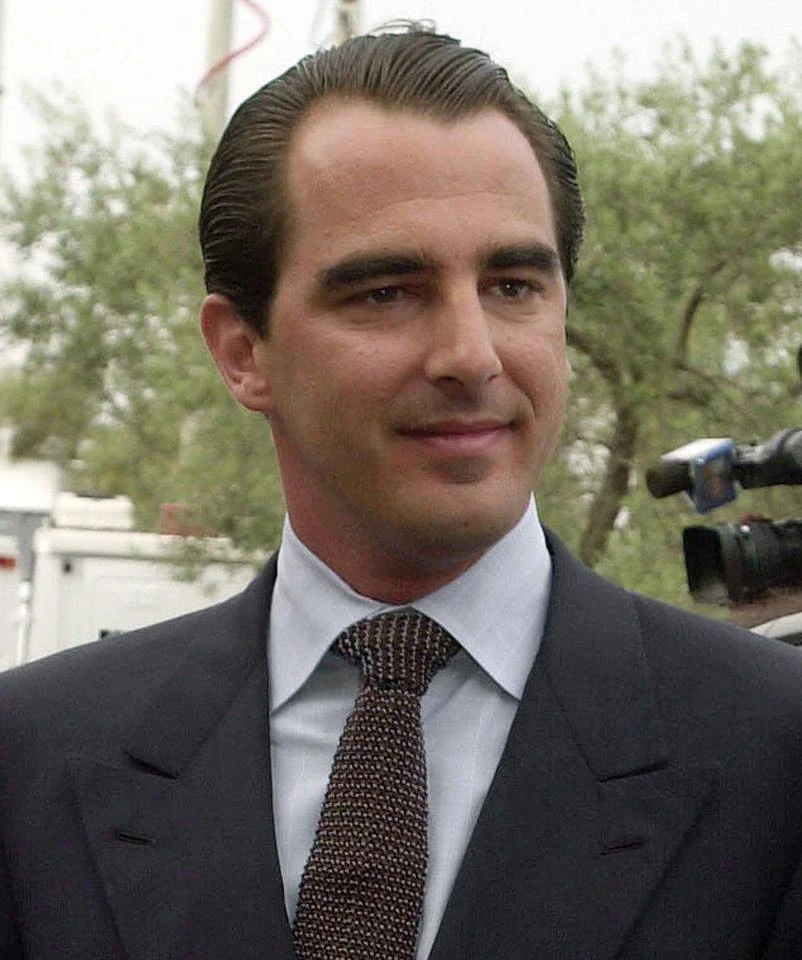
Who exactly is Prince Nikolaos?

Prince Nikolaos of Greece and Denmark was born on 1 October 1969 in Rome, Italy.
He is the third child of King Constantine II and Queen Anne-Marie, the last reigning King and Queen of Greece (the monarchy ended in 1973). That makes him a younger brother of Pavlos, Crown Prince of Greece, whose own wealth profile is covered separately on this site. Because Pavlos is Nikolaos's brother, readers often look for Pavlos Kontides's net worth to compare how the family's wealth is discussed across different profiles Pavlos Kontides net worth.
If you are also researching Pavlos Giannakopoulos net worth, the same caveats about unverifiable estimates apply wealth profile is covered separately on this site. If you are also comparing relatives, the article separately covers Pavlos, Crown Prince of Greece, and his net worth profile pavlos crown prince of greece net worth. Nikolaos is not a reigning royal.
He holds his title by birth but has no formal state functions or publicly funded royal household, which is a critical detail when thinking about where his money actually comes from.
He married Tatiana Blatnik in 2010. In February 2025, AP News reported that he married Chrysi Vardinogianni, daughter of Greek shipping magnate Giorgos Vardinogiannis, in Athens. That second marriage connects him directly to one of Greece's most prominent shipping families, which is relevant context for anyone tracking wealth adjacency, even if it tells you nothing concrete about his personal balance sheet.
One practical warning before you go further: several net-worth aggregator sites confuse Prince Nikolaos of Greece and Denmark with Prince Nikolai of Denmark, a different person entirely. Sites like CelebsMoney have published figures under "Prince Nikolai" that almost certainly belong to the Danish prince, not the Greek one. Always verify which individual a page is actually describing before you use any number from it.
What "net worth" actually means for someone like this
Net worth is total assets minus total liabilities. Simple in theory, very hard in practice for a private individual whose finances aren't required to be disclosed. For a former royal like Nikolaos, assets might sit inside family trusts, private holding companies, or property structures across multiple countries. None of those show up on a public balance sheet.
When Forbes estimates the wealth of privately held individuals, it uses revenue and earnings multiples compared against similar public companies, then applies a 10% liquidity discount. Bloomberg's Billionaires Index similarly builds valuation models for each subject and documents its methodology per profile. Those approaches work reasonably well for business owners with traceable revenue. For a former royal with a mixed portfolio of inherited assets, trust distributions, and creative work income, even that framework produces shaky results because the inputs are so hard to verify.
Most of the net-worth numbers you find for Prince Nikolaos come from aggregator sites that run what they call "proprietary algorithms" on publicly available information. Wikipedia notes that sites like CelebrityNetWorth have faced real skepticism about their verification methods, and LegalClarity is blunt about it: most net-worth sites are producing educated guesses, not verified financial data. That doesn't make them useless, but it means you should treat any specific number as a rough order-of-magnitude indicator, not a fact.
Public information that actually shapes his wealth picture

Even without a financial disclosure, there are concrete public data points worth noting.
- Family inheritance: Constantine II died in January 2023. His estate, including assets recovered or retained from the former royal family's decades-long legal dispute with the Greek state, would pass to his children. The European Court of Human Rights (ECHR) previously heard a case involving Constantine and his family against Greece, relating to property and assets. That litigation history is a matter of public record and is a meaningful piece of the wealth puzzle, even if settlement values weren't fully disclosed.
- Career and earned income: Nikolaos has worked in TV production and media, and has been described in press materials as having a public-facing creative career. His GQ interview and press releases reference this work. That suggests some level of earned income, but no salary figures have been made public.
- High-profile social connections: His 2025 marriage to Chrysi Vardinogianni, daughter of one of Greece's wealthiest shipping families, brought him into an even higher-net-worth orbit. That is socially and contextually significant, but it does not transfer assets to his personal net worth.
- Vanity Fair and mainstream press coverage: He has a visible public profile, which matters for confirming identity and professional activity but provides no audited wealth data.
What the estimate ranges look like and how credible each is
Here is an honest breakdown of what different source types typically report and how much weight each deserves.
| Source Type | Typical Estimate Range | Credibility Assessment |
|---|---|---|
| Celebrity aggregator sites (e.g., WikiFamousPeople, People AI) | $10M to $30M | Low to moderate. These are algorithm-driven estimates with minimal verification. Treat as a rough floor, not a precise figure. |
| Name-confused pages (e.g., 'Prince Nikolai' on CelebsMoney) | Varies widely | Not applicable. Wrong person. Discard entirely unless you can confirm the page is specifically about Nikolaos of Greece. |
| Serious financial journalism (Forbes, Bloomberg) | No published figure for Nikolaos specifically | N/A for this individual. Neither Forbes nor Bloomberg has profiled him, which itself signals he is not in billionaire territory. |
| Contextual inference (family estate, ECHR case, career income) | $10M to $50M (wide range) | Moderate. This is the most defensible approach but still produces a wide range due to missing data on trust structures and private holdings. |
The honest takeaway is that no single verified number exists. The absence of a Forbes or Bloomberg profile tells you he is almost certainly not a billionaire. The presence of a royal lineage, family estate, and high-society lifestyle suggests he is not a modest-income individual either. The $10M to $30M range from aggregators is plausible but not backed by documentation.
Where the money likely comes from

For someone in Nikolaos's position, wealth typically flows from a combination of sources rather than a single identifiable stream. Here is what is most plausible based on publicly available context.
Family trust and estate structures
The former Greek royal family's assets are likely held through private trusts or holding structures established across European jurisdictions. This is standard practice for former noble families, and it is exactly the kind of arrangement that makes net-worth estimation nearly impossible from the outside. Trust distributions may not appear in any public record.
Inherited assets from Constantine II's estate
Following King Constantine II's death in January 2023, his estate would be divided among his heirs. The former king's long-running dispute with the Greek government over properties including the Tatoi palace and Mon Repos estate had partial resolutions over the years. Any assets that remained in the estate at Constantine's death are now subject to inheritance among his five children, including Nikolaos. Compare this to what is documented about Pavlos, Crown Prince of Greece, and the family wealth picture becomes slightly clearer at the macro level even if individual shares remain private. For more detail on how those inheritance dynamics can show up in estimates, see the discussion of Pavlos Syntikidis net worth Pavlo simtikidis net worth.
Real estate
European royals and former royals frequently hold property across multiple countries. Nikolaos and Tatiana were known to split time between Athens and other locations. Property records in Greece are increasingly digitized but not always easily searchable, and holdings in other jurisdictions add another layer of opacity.
Career income from media and creative work
His press biography documents involvement in TV production. This provides a plausible earned-income component, but no figures have been disclosed. For someone at his social level, professional income is likely a smaller contributor to overall net worth than inherited and invested assets.
Social capital and high-net-worth adjacency
His 2025 marriage into the Vardinogiannis shipping family is worth noting in context. Greek shipping wealth is among the most concentrated in the world, and the Vardinogiannis family is a significant player in that space. That connection could create investment or business opportunities, though again, none of this translates directly into a balance-sheet number for Nikolaos personally.
Why there is no single verified number
This is not a gap you can close with more Googling. It reflects structural realities about how private wealth works.
- Private individuals with no public company ownership have no mandatory financial disclosures. Unlike a CEO of a public company, Nikolaos is not required to file anything that reveals his asset base.
- Trust and holding company structures legally shield asset values from public view. Even if a trust owns real estate, the beneficial owner's share may not be traceable in public records.
- Multi-jurisdictional holdings compound the problem. Assets spread across Greece, the UK, Switzerland, or elsewhere each require country-specific research, and not all countries have equivalent public record systems.
- Name confusion across platforms means that aggregator figures you find may simply belong to a different person, inflating or deflating the apparent range.
- Inheritance is recent and unresolved publicly. Constantine II's estate is recent enough (2023) that distribution may still be working through legal and administrative processes.
How to research this yourself and find the most reliable evidence today
If you want to go beyond surface-level aggregator sites and do this properly, here is a practical step-by-step approach.
- Start with identity confirmation. Before you use any net-worth figure, verify the page is specifically about Prince Nikolaos of Greece and Denmark (born 1 October 1969, son of Constantine II and Anne-Marie). Reject any page that conflates him with Prince Nikolai of Denmark or any other similarly named royal.
- Check Forbes and Bloomberg first. Search both platforms for his name. If neither has profiled him, that absence is itself useful data: it suggests he is not in nine-figure territory, because both outlets actively track individuals at that wealth level.
- Search Greek financial and business press. Publications like Kathimerini (in English) and Capital.gr cover Greek high-society and business news. ECHR case documents are publicly available and can be searched for references to the former royal family's property disputes.
- Look at AP, Reuters, and mainstream international outlets for factual life events (marriages, deaths, business announcements) that have wealth implications. The February 2025 AP report on his marriage is a good example of the type of event-based reporting that adds context.
- Treat aggregator sites as a sanity check, not a source. Sites like WikiFamousPeople and People AI provide a ballpark. They are useful for confirming you are in the right order of magnitude but should never be cited as primary evidence.
- Cross-reference the sibling profiles. Looking at what is documented about Pavlos, Crown Prince of Greece, and broader coverage of the former Greek royal family's financial history gives you a macro-level baseline. If the family's collective known assets point in a particular direction, that context informs what any individual member's share could plausibly be.
- Document what you found and when. Net-worth estimates change. Note the date of any figure you record (today is May 17, 2026) and re-check periodically if this matters for ongoing research.
The bottom line is that Prince Nikolaos of Greece and Denmark is a private individual with no mandatory financial disclosures, a complex family wealth structure, and genuine ambiguity about the current state of his inherited assets. The $10M to $30M range floating around online is a reasonable working estimate, but you should hold it loosely. The real value in researching someone like this comes from understanding the architecture of where the money sits, not chasing a precise figure that no public source can actually verify. If you are researching his prince of Greece net worth, focus on the credibility of each source type and treat any single figure as a rough estimate.
FAQ
Why do different websites list wildly different numbers for Prince Nikolaos’s net worth?
Most discrepancies come from guessing the size of inherited holdings without knowing the actual trust terms or whether assets were already transferred to heirs. Some sites also average multiple relatives or blend “Nikolaos” results with similarly named royals, which can shift the estimate by millions.
Is it accurate to treat the $10M to $30M range as his true net worth?
Use it as a working range, not a fact. If the underlying methodology relies on public lifestyle cues or unverified property assumptions, the estimate might reflect spending patterns rather than liquid assets, so the number can overstate or understate what he can actually access.
How can I tell if a “Prince Nikolai” listing is the wrong person?
Check for the biography details, not just the title. The Greek prince’s profile should mention his Greek royal lineage and life events such as his birth in Rome, while the Danish prince’s page will not. If the page mixes family names, spouses, or countries, treat the number as unreliable.
Does his lack of public financial disclosures mean nothing can be verified at all?
Not exactly. While total net worth is not auditable, you can still validate narrower claims such as marriages, press roles, and general asset types (for example, property ownership records in specific jurisdictions if available). Those inputs can help you judge whether a site’s estimate is making plausible assumptions.
Could he be a billionaire even if no Forbes or Bloomberg profile appears?
It is unlikely, but not impossible. Forbes and Bloomberg often focus on people with enough verifiable business activity or public filings. A very wealthy individual with mostly private trust holdings could be missed, but the article’s broader context and estimate range point to a non-billionaire outcome.
What role do trusts and holding companies play in net-worth estimates?
They are a major reason precision is impossible. Assets held inside trusts or private entities may not show up in public records, and distributions can be structured through intermediaries. Estimators often have to assume values without confirmation of who controls them or how much income is actually received.
If his father’s estate was divided after King Constantine II’s death, shouldn’t net worth become clearer?
Only at a macro level. Inheritance outcomes can be partially resolved over time, and the remaining assets might be split among heirs with varying access rules. Estimates might get updated after years of quiet transfers, but without documentation you still cannot confirm Nikolaos’s specific share.
How much does his TV production involvement likely affect net worth versus inherited wealth?
In many former-royal cases, professional income is usually smaller than inherited or invested assets, especially if the earnings are not publicly disclosed. You can treat a media role as a supplementary income stream, but do not use it to justify a large portion of an estimate unless specific contracts or revenues are documented.
Could the 2025 marriage into the Vardinogiannis family change his financial estimate?
It can change the assumptions behind estimates, but it does not automatically reveal his personal balance sheet. In high-net-worth families, marriage can provide connections to investments or opportunities, yet net worth depends on actual ownership stakes, trust provisions, and control, which typically remain private.
What is the most common mistake when comparing Nikolaos’s wealth to relatives’ net worth?
Comparing estimates generated with different assumptions. One profile might include business interests or property that another excludes, and some sites roll relatives together or use inconsistent valuation methods. For a fair comparison, compare only ranges and source credibility, not a single headline figure.
What practical steps can I take to improve reliability beyond one aggregator number?
Cross-check the identity first, then prioritize information that indicates asset type (for example, property records where searchable), verify timeline details like marriages, and treat any single net-worth figure as a low-confidence output. If a site refuses to explain inputs or methodology clearly, downgrade it even if the number seems plausible.