
Based on publicly available information about the Vardinogiannis family's shipping, fuel, and industrial holdings, a defensible estimated net worth range for Yiorgos (Giorgos) Vardinogiannis as of July 2026 is broadly in the range of $500 million to $1.5 billion, when accounting for his share of the family group's diversified assets. That's a wide range, and for good reason: the family's core businesses are privately held, which makes precision impossible without insider disclosure. What follows is the full reasoning behind that number and how to stress-test it yourself.
Yiorgos Vardinogiannis Net Worth Estimate and Sources

Dimitri Papadopoulos
10 Jul 2026

Who Yiorgos Vardinogiannis actually is
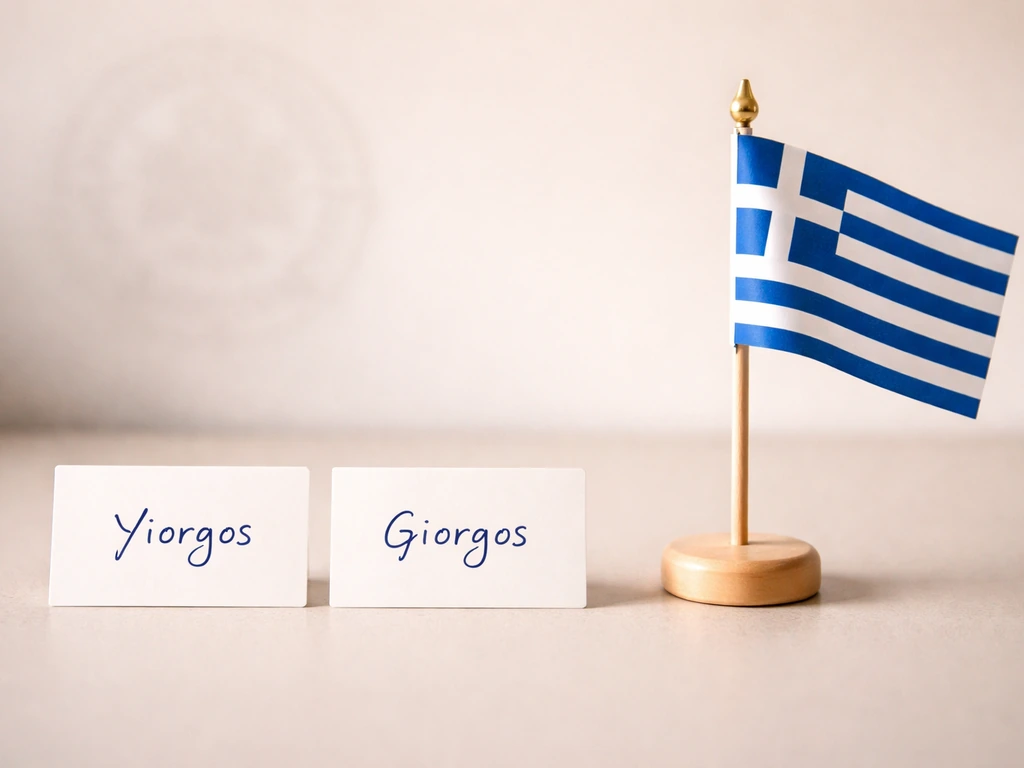
Before diving into the money, let's clear up the name confusion. Yiorgos Vardinogiannis and Giorgos Vardinogiannis are the same person. The difference is purely transliteration: the Greek name Γιώργος Βαρδινογιάννης gets rendered different ways in Latin script depending on the source. If you've seen both spellings in search results, you're looking at the same individual.
Yiorgos Vardinogiannis was blank" rel="noopener noreferrer">born on 7 April 1936 and is a Greek businessman from a Cretan-origin family that built one of Greece's most powerful shipping and industrial dynasties. He is best known internationally as the former owner and president of Panathinaikos F.C., the Athens football club. The family acquired the majority shares of the newly incorporated public football company in 1979, and Yiorgos became president. His profile places him squarely in the category of Greek shipping magnates whose wealth is rooted in maritime trade, fuel distribution, and energy-adjacent industries.
It's important to understand that the Vardinogiannis family operates as a group, not as a single person's enterprise. The Vardinogiannis family is described as a blank" rel="noopener noreferrer">Cretan-origin shipping family, tied to the group’s shipping and industrial footprint including fuel/bunkering and related maritime activities. Yiorgos is one prominent member of that group, alongside relatives including Giannis Vardinogiannis, who in 2012 transferred 54.7% of Panathinaikos shares to the Panathinaikos Alliance. When you read about "Vardinogiannis wealth," you're usually reading about the collective family group, not a single individual's personal balance sheet. Attributing a specific number to Yiorgos personally requires making assumptions about his individual share of that group.
What net worth actually means for someone like this
Net worth is simply assets minus liabilities. For a publicly traded company executive, you can calculate it fairly precisely using disclosed shareholdings and stock prices. For a private shipping magnate operating through family-held entities, it's much harder. If you are also comparing other notable figures' finances, you can look at Leonidas Kavakos net worth for a separate perspective on how wealth estimates are framed. There's no quarterly filing that says "Yiorgos Vardinogiannis owns X% of Company Y, which is worth Z euros today."
The assets that matter most for someone in this position fall into a few categories: ownership stakes in operating businesses (shipping companies, fuel distribution, refining), real estate holdings both in Greece and abroad, liquid financial assets like cash and securities, and minority stakes in other ventures. Liabilities include business debts, personal loans secured against assets, and any family trust obligations.
A critical distinction is liquidity. A shipping fleet worth hundreds of millions of dollars is not the same as cash. Vessels can be sold, but markets fluctuate dramatically, and the process takes time. When you see a net worth figure for a shipping magnate, most of that wealth is illiquid and tied to asset valuations that shift with global freight markets and oil prices. The number on the page is always a snapshot, not a bank balance.
Where the money likely is: a step-by-step breakdown

To estimate Yiorgos Vardinogiannis's wealth, you need to work through the family group's known holdings and apply reasonable assumptions about his personal share. Here's the methodology, step by step.
- Identify the core business entities. The Vardinogiannis group's wealth is rooted in shipping and maritime fuel-related activities, including bunkering (supplying fuel to ships) and oil trading. These are capital-intensive businesses where even a modest market share translates to significant asset value. Start by mapping which companies the family controls or has historically controlled.
- Estimate business valuations using sector benchmarks. Privately held shipping and fuel companies are typically valued at a multiple of EBITDA (earnings before interest, taxes, depreciation, and amortization). Greek shipping firms comparable in size often trade at 6x to 10x EBITDA in acquisition scenarios. Without disclosed financials, you work backward from publicly known revenues or market-size estimates for their segment.
- Account for real estate. Wealthy Greek shipping families routinely hold significant real estate in Athens, on Greek islands, and in financial centers like London or Monaco. While specific properties are rarely disclosed, this category typically adds 5-15% on top of business asset values for families at this wealth level.
- Estimate the individual's share of the family group. This is the hardest step. If the Vardinogiannis group is worth an estimated €2-4 billion in total (a rough industry-based estimate accounting for multiple family members and entities), Yiorgos's individual share depends on ownership structures, trust arrangements, and succession decisions made over decades. Without a disclosed will or corporate registry showing his specific percentage, a conservative estimate puts his personal share at somewhere between 20% and 40% of the group total.
- Deduct estimated liabilities. Shipping businesses are typically leveraged, with vessel financing and working capital loans common. A 20-30% haircut for estimated debts against the gross asset figure is a reasonable assumption for a group of this type.
- Convert to USD or EUR consistently. The Vardinogiannis group operates in euros and dollars. When comparing figures from different sources, check which currency was used and at what exchange rate, especially given EUR/USD fluctuations over the past several years.
Running through these steps, a personal net worth in the $500 million to $1.5 billion range for Yiorgos Vardinogiannis is a reasonable outcome. The lower end assumes a smaller personal share of the group and higher debt loads. The upper end assumes a larger direct ownership stake and more conservatively leveraged assets.
Which sources are actually worth trusting
Not all sources are equal here, and some of the most widely cited wealth estimates online are essentially fabricated or years out of date. Here's how to evaluate what you find.
| Source Type | Reliability | What to Use It For |
|---|---|---|
| Greek business publications (e.g., Naftemporiki, Capital.gr) | High | Corporate news, ownership changes, deal disclosures in the Greek market |
| Company registry filings (Greek GEMI, company annual reports) | High | Legal ownership stakes, subsidiary structures, declared financials where available |
| Forbes Greece / international Forbes lists | Medium-High | Ballpark wealth rankings, though methodology is rarely fully disclosed |
| Wikipedia (Greek and English) | Medium | Background and historical context, useful for timeline and family structure |
| Celebrity net worth aggregator sites | Low | Often fabricated or copied from other fabricated sources, treat with skepticism |
| Shipping industry databases (e.g., Lloyd's List, Equasis) | High | Fleet ownership, vessel valuations, operational footprint |
For the Vardinogiannis family specifically, Greek financial press sources like Naftemporiki and Capital.gr have covered the family's business moves for decades. These are your best primary sources for tracking ownership changes, new investments, and any disclosed financials. The Panathinaikos F.C. ownership history, which is well-documented including the 2008 €80 million capital increase and the 2012 share transfer, is a useful secondary thread because it gives you verifiable anchors for the family's financial behavior in a publicly reported context.
The estimated range and what drives it

The most defensible personal net worth estimate for Yiorgos Vardinogiannis as of July 2026 is $500 million to $1.5 billion. Here are the key assumptions behind that range and where each one introduces uncertainty.
- Family group total value estimated at €2 billion to €4 billion, based on the scale of Greek shipping and fuel distribution businesses comparable to the Vardinogiannis group's known activities. This is an industry-informed estimate, not a disclosed figure.
- Yiorgos's personal share assumed at 20-40% of the family group, reflecting that he is a senior founding-generation member but that the group includes multiple family branches and has undergone succession across decades.
- Debt and liabilities estimated at 20-30% of gross assets, consistent with capital-intensive shipping and fuel businesses that rely on asset-backed financing.
- Real estate and liquid holdings added at approximately 10-15% of business asset value, in line with typical wealth composition for Greek shipping families at this level.
- Currency conversion based on approximate EUR/USD parity in mid-2026, which affects the dollar figure meaningfully if the euro strengthens or weakens.
The single biggest source of uncertainty is the personal ownership share. For comparison, if you are also looking at ivan gazidis net worth, it helps to compare how ownership structure and liquidity assumptions change what a reported figure can actually represent. If Yiorgos holds a larger direct stake in key group entities than assumed, the number could push well above $1.5 billion. If his interests have been transferred to family trusts or successors over time, the personally attributable figure could be at the lower end or even below $500 million. Age is a factor here too: born in 1936, he is 90 years old as of July 2026, which means wealth transfer to children and grandchildren may have already occurred in legally significant ways.
Why different sites give you wildly different numbers
If you've searched for Yiorgos Vardinogiannis's net worth before landing here, you've probably seen figures that range from a few million dollars to several billion. If you are specifically looking for Matt Ioannidis net worth, use the same approach: focus on verified holdings, not viral estimates. That spread is not random. Here's why it happens.
- Valuation timing: Shipping asset values swing dramatically with global freight rates and oil prices. An estimate made in a boom year can be double one made in a downturn, even for the same person with the same assets.
- Confusing family wealth with individual wealth: Many sites report the Vardinogiannis family's collective net worth and attribute it to one person. A multi-generational family group worth €3 billion is not the same as Yiorgos personally being worth €3 billion.
- Private company opacity: Because the core businesses are not publicly listed, there's no market cap to look up. Each analyst or journalist has to estimate, and those estimates diverge based on methodology and assumptions.
- Currency inconsistency: Some sources use euros, some dollars, some don't specify. A €1 billion figure in euros translates to roughly $1.1 billion in dollars at current rates, but at 2020 exchange rates that same euro figure would yield a different dollar number.
- Stale data: Many aggregator websites pull from a single old source and never update. A figure calculated in 2015 based on 2013 data may still be sitting on a website in 2026 with no indication that it's a decade out of date.
- Scope confusion: Some sources count only Panathinaikos-related assets (which by 2026 are minimal, given the 2012 share transfer) and miss the far larger underlying shipping and fuel businesses entirely.
How to keep this estimate current going forward
A net worth estimate for a private individual is only as good as its most recent data. Here's a practical routine for updating your understanding as new information becomes available.
- Set up Google Alerts for 'Vardinogiannis' in both Greek (Βαρδινογιάννης) and English. This catches news from Greek business press that often doesn't surface in English-language searches.
- Monitor the Greek company registry (GEMI, gemi.gov.gr) for any entities linked to the Vardinogiannis name. Annual financial filings, when submitted, can reveal revenue figures and asset changes at the company level.
- Track Lloyd's List or Equasis (equasis.org) for fleet changes. If the family is buying or selling vessels, that's a direct signal about business scale and direction.
- Watch for Forbes Greece coverage, particularly any annual wealth rankings that include Greek shipping families. These are published periodically and give a sanity check against your own estimates.
- Follow Panathinaikos F.C. ownership news. While the club's direct financial significance to Yiorgos personally has diminished since 2012, any further stake changes or legal developments involving the family and the club get covered extensively in Greek media.
- Revisit your assumptions after major macroeconomic shifts: oil price swings, Baltic Dry Index changes, and EUR/USD moves all directly affect the estimated value of the underlying businesses.
For context within the broader landscape of notable Greek wealth, Yiorgos Vardinogiannis sits in a different category from figures like sports professionals or cultural icons. If you are looking at how net worth is framed for other shipping-family figures, you may also want to compare this with Leonidas Arkona net worth as another related data point. His wealth is industrial and generational, built over decades rather than earned through a career. That makes it more stable in some respects but also more opaque and harder to pin down with precision. What you can say with confidence is that he is one of the most significant figures in the history of Greek shipping wealth, and any estimate in the hundreds of millions of dollars is grounded in real business scale, not speculation.
FAQ
Why do online results for Yiorgos Vardinogiannis net worth vary from millions to billions?
Most figures mix the family group’s total value with Yiorgos’s personal attributable share. They also use outdated assumptions for private-company valuations and ignore illiquidity, so the same underlying assets can produce very different “net worth” outputs depending on what percentage gets assigned to him.
Does Yiorgos Vardinogiannis have a single public company that makes his net worth easy to calculate?
No. His wealth is tied to privately held operating entities and group-level holdings. Without disclosed personal shareholdings, any precise number is mostly model-based, not directly calculated from audited personal statements.
How can I estimate his personal share if the family group is structured through multiple companies and relatives?
Start by identifying which specific operating assets are controlled by the family group (shipping, fuel, industrial/energy-adjacent businesses), then apply a defensible ownership split for Yiorgos based on available ownership-transfer records and governance disclosures. Finally, reduce the implied value using liquidity and leverage assumptions, since private entity valuations are not the same as cash.
What’s the biggest mistake people make when estimating yiorgos vardinogiannis net worth?
Treating asset valuations as spendable cash. Shipping and industrial assets are typically illiquid, and selling them to “get cash” can involve price swings, time delays, and transaction costs, so net worth snapshots can look much higher than real liquidity.
Can trusts or succession planning make his personal net worth look lower than the family group’s wealth?
Yes. If interests were moved to family trusts, successors, or entities he does not control directly, public observers may still describe “Vardinogiannis wealth” while overstating or understating what is attributable to him personally.
How should I interpret “net worth” in the context of leveraged shipping and industrial holdings?
Net worth should be assets minus liabilities, but many online estimates effectively ignore debt allocation. A correct approach requires considering how much borrowing sits at the entity level, whether debts are recourse to the family/individual, and how lenders treat asset collateral during downturns.
If his wealth is tied to oil, shipping, and fuel markets, what happens to his net worth during market downturns?
Valuations can fall quickly because asset prices and charter-rate expectations change, but leverage and debt covenants can constrain sales. That means his net worth can drop faster in valuation models than in real cash terms, especially if refinancing becomes harder.
Is the birthdate detail relevant to net worth modeling?
It can be. At his age, wealth transfer decisions, estate planning, and changes in control can shift which assets are actually attributed to him versus heirs. That is one reason personal net worth estimates may drift toward the lower end even when the family group remains valuable.
How often should I update my estimate for yiorgos vardinogiannis net worth?
Use a trigger-based routine rather than relying on a single number. Revisit when there are new ownership transfers, corporate restructuring, major changes at Panathinaikos, or major shifts in shipping/fuel market indicators that could alter valuation assumptions.
Are Greek financial press outlets usually more reliable than viral net worth calculators for this case?
For this specific profile, yes. Press coverage that documents ownership changes and business moves provides better anchors for modeling. Viral calculators often recycle assumptions across years without new evidence, which is why their figures can become disconnected from the most recent known transactions.